

Why Handmade Jewellery Is Worth It
Table of Contents
- Handmade Jewellery Tells a Story Mass Production Can't
- Handmade vs Mass Produced Jewellery: The Real Difference
- The Value of Handmade Jewellery: What You're Actually Paying For
- Durability and Longevity: Does Handmade Last?
- The Artist's Hand: Why Imperfection Matters
- Jewellery as Identity, Not Just Accessory
- How to Choose Handmade Jewellery That Lasts
- Frequently Asked Questions
Last Updated: September 20, 2026
Handmade Jewellery Tells a Story Mass Production Can't
There's a difference between owning jewellery and owning something that owns you, and understanding why handmade jewellery is worth it changes everything. When you wear handmade jewellery, you're not just wearing an object, you're wearing a story. At Sixth Dimension Gems, we design pieces that carry intention, craft and the unmistakable fingerprint of human hands. Mass-produced jewellery is efficient. It's consistent. It's everywhere. But handmade jewellery is alive in a way factory pieces simply aren't.
Each handmade piece carries the energy of the person who made it. The artisans in Jaipur who craft Sixth Dimension Gems pieces spend hours on a single ring or bracelet, making decisions about proportion, colour and form that no algorithm could replicate. When you wear something made by hand, you're wearing those decisions. You're wearing someone's skill, their eye, their care.
This matters because jewellery isn't decoration, it's identity. It's the thing you reach for when you want to feel like yourself. Mass production assumes everyone wants the same thing. Handmade jewellery knows better.
Handmade vs Mass Produced Jewellery: The Real Difference
The gap between handmade and mass-produced jewellery goes far deeper than aesthetics. When something is made by hand, every piece is slightly different. The gemstone isn't perfectly uniform. The metalwork has subtle variations. These aren't flaws, they're proof of authenticity.
Mass production prioritises uniformity and speed. Thousands of identical pieces roll off production lines, each one indistinguishable from the last. The cost is lower, but so is everything else: the attention to detail, the quality of materials, the sense that someone actually cared about what they were making.
Handmade jewellery, especially pieces designed by an artist like Louisa de Haas, reflects a completely different philosophy. Artist vision guides every decision. Colour combinations are chosen deliberately. Scale and proportion are considered carefully. The result is jewellery that feels intentional rather than accidental.
There's also the matter of connection. When you buy handmade jewellery from a maker you can actually learn about, you're supporting a craft tradition and a person's livelihood. You know where it came from. You can imagine the hands that made it. That knowledge changes how you wear the piece.
The Value of Handmade Jewellery: What You're Actually Paying For
When you see the price of a handmade piece, you're not paying for materials alone. You're paying for skill, time, intention and expertise. A hand-carved gemstone pendant takes hours to create. The artisan needs the technical skill to carve it. They need the artistic eye to know what shape will make the stone sing.
You're also paying for the design process. Louisa de Haas doesn't simply commission pieces and move on. She sources materials herself, travels to Jaipur to work with artisans, and often handmakes pieces in her own studio in the Southern Highlands. She makes decisions about which gemstones work together, how colours interact, what scale feels right. That artistic vision costs something. It should.
Mass-produced jewellery can be cheap because it cuts corners everywhere. Lower-quality materials. Minimal labour (much of it automated). No designer involved. The result is affordable, but it's also forgettable. You wear it for a season and move on.
Handmade jewellery is an investment in something that will last, not just in time, but in meaning. A piece from Sixth Dimension Gems isn't something you'll tire of. It's the kind of jewellery people ask about.
Durability and Longevity: Does Handmade Last?
This is the question that stops people: if it's handmade, does it actually last? The answer is yes, when crafted with quality materials and care.
Handmade jewellery made from quality materials (sterling silver, gold-plated brass, natural gemstones) is built to endure. The artisans who make Sixth Dimension Gems pieces understand longevity. They use protective coatings on brass pieces. They set gemstones securely. They create pieces with weight and substance, the kind of jewellery you can actually wear every day.
A handmade ring might show wear differently than a factory-made one. The patina builds character. Small scratches become part of the story. This isn't deterioration, it's evidence of a life lived in the piece.
The Artist's Hand: Why Imperfection Matters
Here's what most people get wrong about handmade jewellery: they think perfection is the goal. It isn't. Connection is the goal.
When Louisa de Haas designs a piece, she's not trying to create something flawless. She's trying to create something true. A hand-carved gemstone won't have perfectly symmetrical edges. A hand-beaded necklace will have subtle variations in how the beads sit. A handmade ring will have character marks that show it was shaped by human hands, not a machine.
Jaipur Soul: Handmade Moonstone (round) →
These aren't imperfections. They're proof of authenticity.
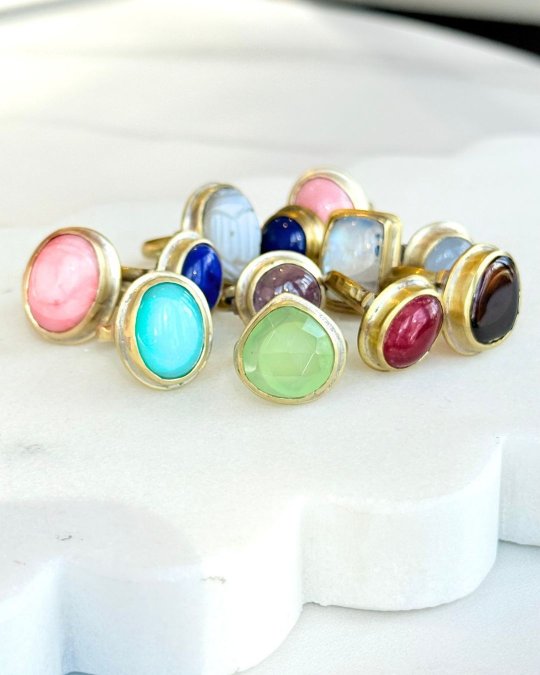
Machines create uniformity. Artists create meaning. The slight irregularities in a handmade piece are what make it feel alive. They're what make you feel connected to the person who made it. You're not wearing a product. You're wearing evidence of skill and care.
This is especially true with pieces from the Beaded Edit collection. Each hand-beaded necklace is unique because Louisa sources beads from around the world, across cultures, times and travels. The beads are collected, not manufactured. The combinations are intuitive, not algorithmic. The result is jewellery that feels like it has travelled, like it has a history, like it belongs to someone who actually loves colour and adventure.
Jewellery as Identity, Not Just Accessory
Handmade jewellery works differently in your life than mass-produced pieces. It doesn't fade into the background. It doesn't feel interchangeable with what everyone else is wearing.
When you wear a piece from Sixth Dimension Gems, you're making a statement about who you are. You're saying you notice colour. You're saying you value craft. You're saying you'd rather wear something unusual and meaningful than something safe and forgettable. You're saying you're confident enough to be noticed.
This is jewellery as identity. It's not decoration. It's self-expression.
The Gemstone Charm Collection works this way. These little treasures are designed to be collected and layered over time. You build a personal collection that evolves with you. Each pendant you add tells part of your story. Over years, you've got this beautiful, deeply personal collection that no one else has.
It can be more challenging to build identity with mass-produced jewellery.
How to Choose Handmade Jewellery That Lasts
If you're going to invest in handmade jewellery, choose pieces that matter. Here's what to look for:
Know the maker. You should be able to learn who designed the piece and who made it. With Sixth Dimension Gems, you know Louisa de Haas designed it and master artisans in Jaipur crafted it, or Louisa herself handbeaded it in her Australian studio. That transparency matters.
Understand the materials. Ask what the piece is made from. Gold-plated brass (nickel-free) is wearable. Yes it needs to be taken off when swimming or showering, and no- it doesn’t like hand sanitiser. But the aging is part of its charm. Sterling silver is classic- and a silver polish cloth will give it new life over the years. Natural gemstones have character. Understand what you're getting and why it matters.
Choose pieces you'll actually wear. Handmade jewellery is an investment. Don't buy something because it's beautiful if you won't actually wear it. Choose pieces that fit your life, your style and your personality. A handmade ring you wear every day is worth far more than a stunning necklace that lives in a drawer.
Look for intention. Does the piece feel like someone thought about it? Is there evidence of design decisions? Are the colours chosen deliberately or randomly? Does it feel like it has a purpose? Handmade jewellery should feel intentional.
Consider the story. The best handmade pieces come with a story. Where did the gemstones come from? Why did the artist choose these colours? What inspired the design? A piece with a story becomes part of your story.
The pieces in the Sixth Dimension Gems collection, whether it's the Jaipur Soul rings, the Goddess in Green bracelet with its luminous hand-cut green onyx, or the Purple Tide necklace with its hand-carved rock quartz pendant, all carry these qualities. They're designed by an artist who understands colour and composition.

Frequently Asked Questions
What are the benefits of buying handmade jewellery?
Handmade jewellery offers uniqueness—no two pieces are identical—combined with superior craftsmanship and artistry. Each piece carries the maker's intention and skill, making it a wearable expression of identity rather than a generic accessory. You're also supporting artisans directly, investing in pieces with genuine stories and emotional resonance that mass-produced items simply cannot match.
Why does handmade jewellery cost more than mass-produced pieces?
Handmade jewellery reflects the true cost of skilled labour, quality materials and time. Master artisans spend hours on each piece, selecting natural gemstones, hand-cutting stones and hand-setting them with precision. Mass production cuts corners through automation and cheaper materials. With handmade pieces, you're paying for artistry, durability and the maker's expertise—not just the metal and stone.
Is handmade jewellery more durable than factory-made items?
When crafted by skilled artisans using quality materials, handmade jewellery is typically more durable. Artisans take time to ensure proper stone-setting, use superior materials like solid brass with protective e-coatings, and build pieces to last. Mass-produced jewellery often uses thinner materials and rushed assembly, leading to loose stones and tarnishing. Quality handmade pieces can become cherished items.
How can you tell if jewellery is truly handmade?
Authentic handmade jewellery shows signs of individual craftsmanship: slight variations between pieces, visible artisan marks, hand-carved details that aren't perfectly uniform, and quality materials clearly stated. Reputable makers provide transparent information about their process, sourcing and materials. Look for makers who discuss their craft openly, show their studio or workshop, and can explain exactly how each piece was made.