

How to Layer Necklaces Without The Tangle
Table of Contents
- Why Layering Necklaces Matters
- The Best Necklace Lengths for Layering
- Mixing Chain Styles for Layering
- Conclusion
- Frequently Asked Questions
Last Updated: September 19, 2026
Why Layering Necklaces Matters
Layering necklaces isn't about following rules. It's about choosing what you love and wearing it all at once. But if you've ever clipped on two chains only to find them twisted into a knot by afternoon, you know the frustration. The good news: tangling isn't inevitable. It's a problem with a solution.
At Sixth Dimension Gems, we design jewellery built for layering. Our hand-beaded pieces and gemstone chains are made to work together, to sit at different lengths, and to catch light in unexpected ways. But even the most beautiful necklaces need a strategy to stay separate and stunning throughout your day.
This guide shows you exactly how to layer necklaces without tangling. We'll cover the lengths that work, the chain styles that play well together, and the practical tricks that keep your pieces exactly where you put them.
The Best Necklace Lengths for Layering
The secret to layering necklaces without tangling starts with length. When chains sit at different heights on your neck and chest, they stay separate. When they're similar lengths, they tangle.
Think of it like this: three necklaces at the same length will fight for space. Three necklaces at different lengths have their own zones.
Standard layering lengths work like this:
- Choker or collar (35-40 cm): Sits tight against the base of your neck. This is your top layer.
- Princess length (45-50 cm): Falls just below the collarbone. Your middle layer.
- Matinée length (55-65 cm): Rests on the upper chest. Your longest visible layer.
Each zone gives a chain room to breathe. A choker won't tangle with a matinée necklace because they're not competing for the same space on your body.
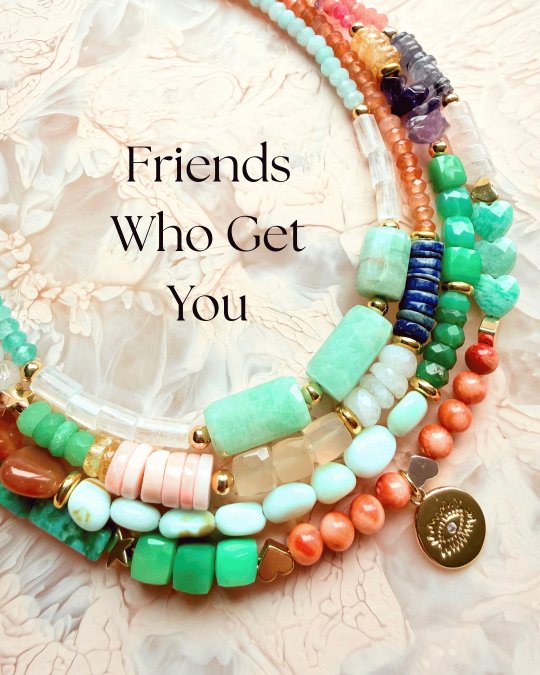
One off multi strand necklaces- handbeaded and unique
If you're working with hand-beaded pieces or gemstone chains like those from Sixth Dimension Gems, adjustable lengths give you even more control. Many of our pieces come with adjustable clasps, so you can shift the length to fit your layering plan for the day.
The rule isn't rigid. A 50 cm chain and a 55 cm chain can still tangle if they're both loose. But a 40 cm choker and a 60 cm matinée? Those will stay in their own lanes.
Mixing Chain Styles for Layering
Not all chains are created equal. Some are delicate. Some are bold. The way they sit on your skin, the weight they carry, and the space they take up all matter when you're layering.
Thick Links with Fine Chains
Thick gold-plated links have presence. They sit away from your skin because of their weight. Fine chains, by contrast, drape close and delicate.
When you layer thick with fine, you get visual contrast and physical separation. The thick chain creates distance. The fine chain nestles into that gap without fighting for space.
This pairing works beautifully in practice. A chunky gold-plated chain at choker length paired with a delicate chain at matinée length creates depth. They don't compete. One says "look at me." The other whispers.
The trick is weight distribution. Heavier chains should sit closer to your neck (where your body can support them). Lighter chains can float lower.
Beaded Necklaces and Charm Chains
Hand-beaded necklaces add texture and colour. They're not smooth like a metal chain, so they behave differently when layered.
Beaded pieces like Born to Feel Electric or Forest Bather sit with a bit of structure because the beads create natural spacing. They don't collapse against your skin the way a thin metal chain might.


Pairing a beaded necklace with a charm chain works because they occupy different visual and physical spaces. The beads are chunky and dimensional. The charm chain is linear and sleek. They don't fight. They complement.
The colour in beaded pieces also matters. A necklace with turquoise and amethyst beads layered with a plain gold chain creates visual interest without physical tangling. The eye reads them as separate pieces because they look different.
The SDG S Clasps Make It So Easy the Right Necklace Detangler Clasp
Some clasps are designed specifically for layering. An S-hook clasp lets you adjust length easily and keeps the chain from slipping.
Many of our charm chains, including the Charm Chains collection, feature simple S-hook clasps. These allow you to adjust the length slightly, which means you can fine-tune how your layers sit without removing the necklace.

Conclusion
Layering necklaces without tangling comes down to three things: choosing the right lengths, staggering your clasps, and securing each layer in its own space. It's not complicated. It's just intentional.
When you layer with purpose, your jewellery stays beautiful and untangled all day. And when you're choosing pieces that are designed for layering, hand-beaded necklaces with adjustable clasps, gemstone charm chains with thoughtful construction, the whole process becomes easier.
At Sixth Dimension Gems, our pieces are made to layer. They're designed by an artist who understands composition, contrast, and how colours and textures play together. Whether you're building a stack with Aqua Prism or mixing our beaded pieces with fine chains, you're working with jewellery that's built for this.
Choose what you love. Layer freely. And wear exactly what makes you feel like yourself.
Frequently Asked Questions
What is the best way to keep necklaces from tangling when layered?
Start with clasp placement at the back of your neck, varying positions so clasps don't sit on top of each other. Use necklaces of different lengths (try 40cm, 50cm and 60cm) so chains naturally sit at different points on your chest. When wearing multiple pieces, secure each one before adding the next, and consider using a necklace detangler clasp on at least one piece to reduce friction between chains.
How do you layer necklaces of different lengths?
The classic approach is to use three lengths: a shorter piece (40-45cm) that sits high on the collarbone, a medium piece (50-55cm) that falls mid-chest, and a longer piece (60cm or more) that creates visual depth. Handmade chains from Jaipur often come with adjustable clasps, so you can fine-tune the length of each piece. This variation naturally prevents chains from lying flat against each other, which is where tangling happens.
Does mixing chain types help prevent necklace tangling?
Absolutely. Mixing a thick statement chain with finer chains creates visual interest and reduces tangling because thicker links don't catch on delicate chains as easily. Pairing beaded necklaces with smooth chains also works well, as the texture difference helps keep pieces separate. The key is avoiding three identical chains of similar weight, which are more likely to knot together. Sixth Dimension Gems' hand-beaded pieces and handmade Jaipur chains mix beautifully for this reason.