

Handcrafted vs Mass Produced Jewellery: What's Inside
Table of Contents
- Handcrafted vs Mass Produced Jewellery: The Real Difference
- What Actually Separates Handcrafted from Mass Produced Jewellery?
- The Value of Handmade Gemstone Jewellery: Why It Costs More
- Ethical Jewellery Sourcing Australia: Traceability and Trust
- Why Materials and Craftsmanship Should Drive Your Choice
- Choosing Jewellery You'll Actually Keep
- Frequently Asked Questions
Last Updated: September 25, 2026
Handcrafted vs Mass Produced Jewellery: The Real Difference
Handcrafted vs mass produced jewellery comes down to one question: do you know what you're actually wearing? At Sixth Dimension Gems, every piece is designed by artist Louisa de Haas and made in small batches, by her own hands or by master artisans in Jaipur.
Mass-produced jewellery is built for volume: standardised settings, uniformity, components sourced for cost. Handcrafted jewellery is built for the wearer: stones selected by eye, settings finished by hand, small variations that make each piece its own.
Counterfeit and poorly regulated jewellery has been found in various markets to contain restricted substances like lead, cadmium and nickel above permitted limits. Not every affordable piece is a problem, but the gap between reputable manufacturing and unknown supply chains is real.
What Actually Separates Handcrafted from Mass Produced Jewellery?
The clearest difference is traceability. Handcrafted and small batch jewellery has a visible chain: a designer, a maker, a place, a material list. Mass-produced jewellery is often faceless, and let’s be honest, a little souless too.
Handcrafted jewellery is made in limited quantities by skilled makers who cut, set and finish by hand. Mass-produced jewellery is manufactured at scale using automated processes, with components sourced from multiple suppliers.
The Value of Handmade Gemstone Jewellery: Why It Costs More
Handmade gemstone jewellery costs more because it takes longer, involves more skill, and uses materials chosen rather than bulk-ordered.
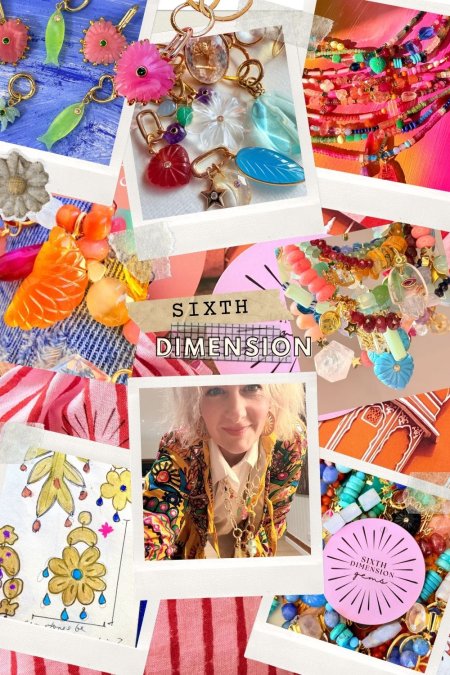
Someone turned their life upside down to build a international relationships with skilled artisans, they spent weeks making connections, travelling, designing, selecting stones… Each piece has considered decisions- the stone, the cut, the setting, filing edges, checking clasps….That's not a cost you can automate away.
Take the Goddess In Green bracelet: hand-cut green onyx ovals, hand-set into entirely hand set gold covered brass links, made in Jaipur. Or the Jaipur Soul moonstone ring, one-of-a-kind, weighty, with its own markings. What you're paying for is individual craftmanship, years of expertise and design decision-making.

Ethical Jewellery Sourcing Australia: Traceability and Trust
Ethical jewellery sourcing in Australia means tracing materials back to their origin and verifying the conditions under which they were made. It's about proof, not promises.
Australian consumers are increasingly asking harder questions about where their jewellery comes from, and regulators take misleading origin claims seriously. The ACCC guidance on country of origin claims sets out what businesses can and cannot claim about where goods are made, which matters when a brand says "handmade" or "ethically sourced."
So what should you look for?
- A named designer or artist behind the brand
- A specific place of manufacture, not just "imported"
- A full materials list: metals, stones, coatings, clasps
- Small-batch or one-off production you can verify
Why Materials and Craftsmanship Should Drive Your Choice
Buying on price alone means buying blind. Knowing the materials, the maker and the method is what turns a purchase into something you'll keep wearing.
Choosing Jewellery You'll Actually Keep
The question isn't handcrafted versus mass produced as a moral judgment. It's about knowing which one you're buying, and choosing on purpose.
Frequently Asked Questions
How can you tell if jewellery is handcrafted or mass-produced?
Look for small variations between pieces: slight differences in stone placement, hand-finished edges or irregular spacing that show a human hand was involved. Mass-produced pieces are usually identical. Ask the brand who made it, where, and from what materials. If they can't answer specifically, that tells you something. Handcrafted jewellery often comes with a story about the maker, the studio and the stones, not just a product code.
Why is transparency in jewellery materials important for consumers?
Knowing what metals, platings, coatings and gemstones are used helps you understand what you're buying and whether it suits your skin, your values and your wardrobe. Transparency also signals a brand that stands behind its work. When a brand names its materials clearly, like nickel-free brass or handcut green onyx, you can make an informed choice rather than guessing from a photo.
Does handcrafted jewellery hold its value better than mass-produced pieces?
Handcrafted jewellery carries value that mass-produced pieces rarely match: the artist's design, the artisan's time, natural gemstones selected by hand and the fact that no two pieces are identical. That doesn't guarantee resale value, but it does mean you own something with provenance. Many people find that pieces with a story become more meaningful over time, which is a different kind of value entirely.
The real challenge isn't finding jewellery. It's finding jewellery you actually know something about: who made it, where, and from what. Sixth Dimension Gems designs every piece with an artist's eye, crafts them with master artisans in Jaipur, and tells you exactly what you're getting. Start with a hand-beaded necklace or a gemstone ring, layer it your way, and choose joy.